Atheists invariably haul out the religious wars of Europe to make the case that religion is pernicious. It is indisputable that from The Age of Faith to the Reformation/Counter Reformation numerous bloody wars and slaughters were committed in the name if the Christian God and there were countless more if you include the wars fought in His second best known name, Allah. It’s not an obviously wacky point.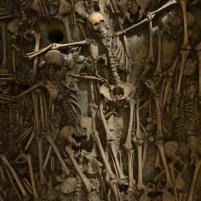
But hold on there—religious war is monstrous just as all war is monstrous, and it is possible that religion is monstrous as well, but the proposition that wars being fought over religion proves that religion is monstrous is a classic example of what philosophers call “an association fallacy of the red herring type.” The herring, i.e., the thing dragged in that is not logically connected is religion. Helen’s face launched a thousand ships only in a poetic sense; Paris and Agamemnon are to blame for the Trojan war, not Helen, love, or beauty.
Such a fundamentally flawed attack shouldn’t require any defense, but logic isn’t a central concern in religion; Christians consistently fall for this argument and end up defending Christianity from the accusation with words to the effect that “sure, there were wars, but those people weren’t real Christians” or “they weren’t acting consistently with Christian principles.“
This is a terrible argument but not because it’s inherently fallacious. It’s weak because it invites the accuser to apply what is known as the duck test, AKA Occam’s Razor. You’d sneer if I defended, say, Nazism, using the same logic. Try it out: “Nazism didn’t really underly the horrors of the Holocaust; the problem was that bad people coopted a good idea. Let’s let bygones be bygones and give it another chance.” No, the killers were Nazis and the actions were consistent with the principles of Nazism as advocated by the founders, so you can go out on a limb and say Nazism caused the Holocaust. It is logically possible that a small animal that looks like a duck, swims like a duck, quacks like a duck, and is often seen in the company of ducks, is not a duck, but that’s not where a wise ornithologist will take the argument.
Continue reading “Christianity and Ducks” →









 Time and Material